What does HIE mean?

Illustration of lungs and oxygen

Hypoxic:

not enough oxygen

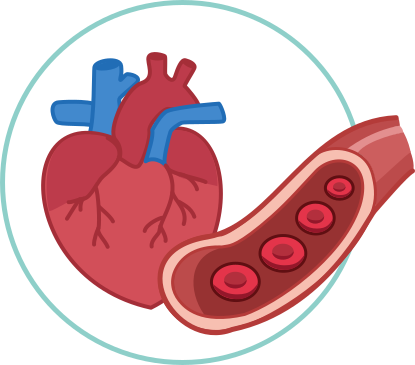
Illustration of a heart and blood vessel

Ischemic:

reduced blood flow

Illustration of a brain

Encephalopathy:

the brain is not
functioning as expected

What Causes HIE?

HIE may follow an event that interrupts oxygen and blood flow to the baby, such as:

  1. Placental tear or damage
  2. Uterine rupture
  3. Umbilical cord compression
  4. Bleeding or blood-pressure changes
  5. Other complications affecting breathing or blood flow

Sometimes the cause is clear. In other cases, it may not be possible to identify one specific event.

Mild, Moderate, and Severe HIE

Symptoms can vary from baby to baby.

Smiling baby wrapped in a green swaddle

MildHIE

Symptoms

  • hyper-alert or irritable
  • high heart rate
  • slight feeding difficulties

Outcomes

  • Many babies with mild HIE recover well and symptoms may improve over the first few days. Some children may still need follow-up to monitor development, learning, feeding, or movement. Some development or learning problems may not emerge until years later.
Sleeping baby wrapped in a yellow swaddle with blue Z symbols

ModerateHIE

Symptoms

  • lethargic or sleepy
  • weak reflexes (grasping or sucking)
  • low muscle tone (hypotonia)
  • seizures may occur

Outcomes

  • Outcomes can vary widely from baby to baby. Some babies recover with few long-term effects. However, many have developmental delays or need ongoing therapies.
  • Follow-up care is important because some challenges may become clearer as the child grows.
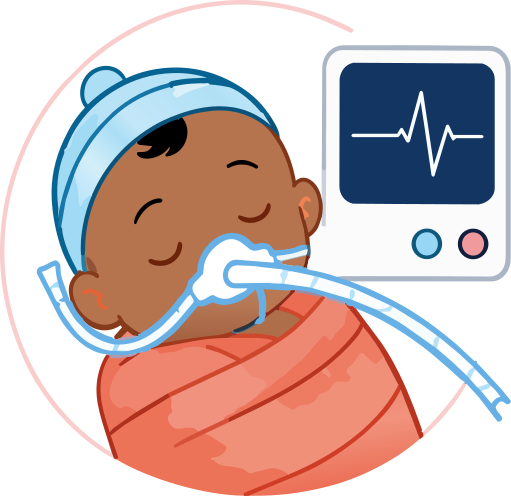
Baby with an oxygen mask and medical monitor

SevereHIE

Symptoms

  • limp or flaccid
  • lack of primitive reflexes
  • severely slowed heart and breathing rates
  • may not breathe spontaneously
  • seizures are common and severe

Outcomes

  • Severe HIE carries the highest risk of long-term complications. Babies may need intensive medical support in the NICU.
  • Possible long-term effects can include cerebral palsy, seizures, feeding difficulties, vision or hearing challenges, developmental delays, or cognitive impairment.
Outline illustration of a sleeping swaddled baby

Every baby’s course is different, and severity does not predict every outcome.
Speak with your medical team for more information about the outlook for your child.

Signs & Diagnosis

How is HIE diagnosed?

Possible Signs

Lungs icon

Difficulty breathing

Baby bottle icon

Trouble feeding

Flexed arm icon

Weak muscle tone or reflexes

Eye icon

Reduced alertness

Baby movement icon

Seizures or unusual movements

The
Complete
Clinical
Picture

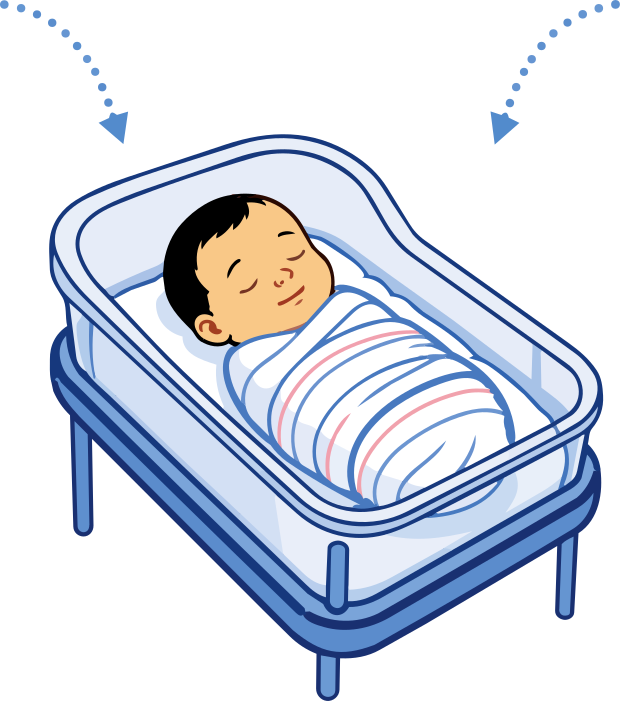
Baby resting in a hospital bassinet with arrows pointing toward the bassinet

Diagnosis & Evaluation

Stopwatch icon

Apgar score

Stethoscope icon

Neurological exam

Blood sample icon

Blood tests

EEG waveform icon

EEG or aEEG monitoring

Brain imaging icon

MRI/brain imaging

No single test diagnoses HIE. Medical teams look at signs, history, exams, and testing together.