1
Concern for
HIE at birth
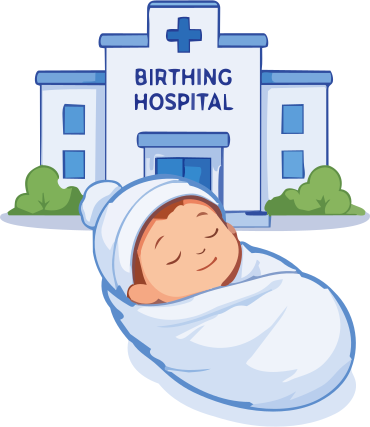
The baby is evaluated at the birthing hospital.


 Cooling therapy is typically available only in a NICU with the right equipment and trained team.
The baby is evaluated at the birthing hospital.
Some babies need transport to a NICU equipped to provide cooling therapy.
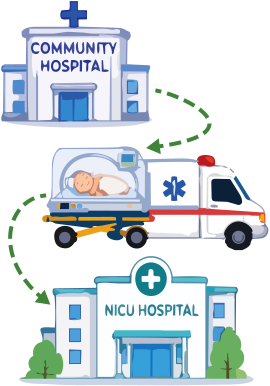
The treatment window starts at birth, so evaluation and transport are urgent.

 Begin as soon as possible — within 6 hours
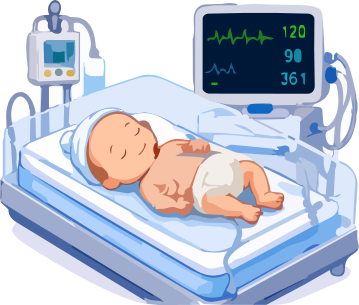
The baby’s temperature is carefully lowered and closely monitored in the NICU.
 Temperature
 Heart
Heart NICU
NICUAfter treatment, the baby is slowly rewarmed while care continues.
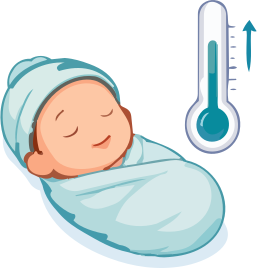
 Ongoing monitoring and supportive care continue.

Cooling slows some of the processes that contribute to ongoing brain injury. It can reduce the risk of death, but it cannot prevent every possible effect of HIE.

Therapeutic hypothermia, or cooling therapy, is the standard treatment for eligible newborns with moderate-to-severe HIE. It is typically provided in a specialized NICU with the equipment and trained team needed to safely cool, monitor, and rewarm the baby.
Not every birthing hospital can provide cooling therapy, so babies with suspected HIE may need to be transferred to a NICU that can evaluate and begin treatment. Because cooling is most effective when started within six hours of birth, evaluation and transport are time-sensitive. This window begins at birth, not when the baby arrives at the receiving hospital.
Cooling can help slow ongoing brain injury and reduce the risk of death or long-term complications, but it does not prevent every possible effect of HIE. Babies receiving cooling therapy require continuous monitoring and supportive care throughout treatment. Side effects associated with cooling therapy can include edema (swelling), blood pressure support needs, clotting issues, respirator support needs, and other effects your medical team can watch for and explain. Speak with your healthcare team for more information.
The effects of HIE vary widely. Outcomes may depend on:
Some children develop without major long-term concerns. Others may experience challenges involving movement, learning, communication, feeding, vision, hearing, or seizures. No single test can predict a child’s future with complete certainty.
Although HIE can cause significant injury, the developing brain has a remarkable capacity to adapt. This ability is known as neuroplasticity. For more information on neuroplasticity, please click here
HIE and cerebral palsy are often confused, but they are not the same. HIE is a brain injury at birth, while cerebral palsy is a possible long-term condition that can result from that injury. Understanding this difference helps clarify diagnosis and long-term expectations.


Brain injury caused by lack of oxygen and blood flow around birth

Describes the initial injury, not a long-term diagnosis

Injury can evolve over hours to days

May present with seizures, abnormal tone, or altered consciousness


Permanent disorder affecting movement, posture, and coordination

Can be a long-term outcome of HIE

Not progressive, though symptoms may change over time

Not all babies with HIE develop cerebral palsy

Key takeaway: HIE is the injury that happens around birth.
Cerebral palsy is a possible long-term condition that can result from that injury.